U.S. Envoys Say Europe Will Join Next Ukraine Peace Talks
The proposed wider format could give European governments a direct role, but no date, envoy or ceasefire agenda has been finalized.
By shahzad
6 min read1 readers
In this story
Key takeaways
U.S. envoy Steve Witkoff said European representatives would join the next round of Ukraine peace talks after his November 12, 2026, meeting with Russian President Vladimir Putin.
The Kremlin's public readout said negotiations would continue but did not explicitly confirm that Europe had been given a seat at the next session.
European leaders were still discussing who could represent them; no common envoy, next-meeting date or ceasefire agenda had been announced by November 13.
U.S. envoys Steve Witkoff and Jared Kushner said on November 12, 2026, that European representatives would take part in the next round of Ukraine peace talks. The Kremlin's official summary of the Moscow meeting did not confirm that arrangement, while Ukrainian President Volodymyr Zelenskyy welcomed the prospect of European participation.
What happened on November 12?
Russian President Vladimir Putin met U.S. presidential envoys Witkoff and Kushner at the Kremlin in Moscow on November 12. The meeting followed two days of U.S.-mediated discussions between Russian and Ukrainian delegations in Abu Dhabi on November 10 and 11. The Associated Press reported on the Moscow meeting and the envoys' subsequent trip to Dublin.
After the Moscow meeting, Witkoff told Russian state television that European representatives would join the next meeting. Reuters reported his statement and said the U.S. envoys viewed a wider format as important because European governments are partners in the effort to end the war.
The Kremlin's transcript of the meeting shows that Witkoff had said he hoped the next trilateral session would include Europeans. The Kremlin's own post-meeting readout was more limited. Presidential aide Yury Ushakov said the negotiation process would continue and that Russia wanted European countries to support discussions about a longer-term European security arrangement. The readout did not explicitly say that European delegates had been confirmed for the next negotiating session.
The same Kremlin statement criticized European military support for Ukraine and said Moscow opposed the idea of foreign troops being deployed in Ukraine after a peace agreement. Putin's position, as described by the Kremlin and Reuters, is that such a deployment would threaten Russian security and could lead to renewed fighting.
Witkoff and Kushner then traveled to Dublin to meet Zelenskyy. The Ukrainian president welcomed the prospect of European participation and said he wanted future discussions to address de-escalation and possible ceasefire steps, according to The Guardian's account of the meeting.
European representation remains unsettled. The Associated Press reported on November 13 that European leaders were debating whether to appoint one representative or a group to take part in the process. There was no consensus on who should fill that role.
The Abu Dhabi talks produced no major breakthrough on the central political issues, although the sides discussed a large prisoner exchange. Big Zero covered that separate development in its report on the proposed Russia-Ukraine prisoner swap.
Why Europe's role matters
Analysis: European governments are not outside observers of the war. They provide substantial support to Ukraine, face the security consequences of any settlement and would be involved in many decisions about Europe's postwar security arrangements.
A wider negotiating format could give those governments a direct opportunity to discuss security guarantees and the conditions needed to support a settlement. It could also make it harder to reach an agreement if Russia, Ukraine and European capitals disagree over what those guarantees should include.
The disagreement is already visible. U.S. envoys described European participation as a positive step. The Kremlin said Europe must change what it views as a policy that prolongs the war and objected to the possibility of foreign military contingents in Ukraine after a settlement. Zelenskyy, meanwhile, welcomed European involvement and wants ceasefire and de-escalation issues included.
The distinction matters: an announcement about who may attend negotiations is not an agreement on territory, security guarantees or the terms of a ceasefire.
What does this mean for Americans?
The United States remains directly involved through the envoys appointed by President Donald Trump. But the November 12 meetings did not announce a ceasefire, a territorial settlement or a new U.S. military commitment.
For Americans following the conflict, the immediate development is diplomatic. It concerns the format of future negotiations and whether European governments will participate directly, rather than only receiving briefings from U.S. and Ukrainian officials.
A broader format could affect future discussions about NATO, European security and the responsibilities of countries supporting Ukraine. Those are potential consequences, not decisions announced at the Moscow or Dublin meetings.
There is no new action for U.S. residents to take based on this announcement alone. The useful next step is to distinguish confirmed decisions from negotiating positions and wait for the parties to publish the next meeting's participants, date and agenda.
What is still unknown and what should readers watch next?
Several important details remain unresolved:
European representation: European leaders had not agreed on a single envoy or negotiating team by November 13.
Russia's confirmation: The Kremlin's public readout did not explicitly confirm that European representatives would sit at the next session.
The next meeting: The parties had not announced a date, location or full list of participants.
The agenda: No agreed agenda for a ceasefire, territorial questions or postwar security guarantees had been published.
The main differences: Russia and Ukraine remain far apart on territory and security arrangements, according to reporting by Reuters and the Associated Press.
The Kremlin also said the Ukraine issue would be discussed further on the sidelines of the APEC summit in Shenzhen later in November. Its readout did not provide a specific date for that discussion.
The next concrete signs of progress will be an official European appointment, confirmation from Moscow that European representatives will attend, and a published schedule for the next round of talks.
FAQ
Have Russia and Ukraine agreed that Europe will join the next talks?
Witkoff said European representatives would attend the next meeting. However, the Kremlin's public readout did not explicitly confirm that arrangement, and European governments had not yet selected a common representative.
Has a ceasefire been agreed?
No ceasefire was announced following the November 12 meetings. The talks are continuing, but the central questions of territory and postwar security remain unresolved.
Who will represent Europe?
That had not been decided by November 13. The Associated Press reported that European leaders were considering whether one person or a group should represent them, but there was no consensus.
What was agreed at the Abu Dhabi talks?
The November 10–11 discussions produced an agreement in principle for a large prisoner exchange, with the parameters still being worked out. They did not produce a ceasefire or a broader political settlement; see Big Zero's earlier report on the prisoner exchange.
Bottom line
U.S. envoys say Europe will join the next Ukraine peace talks, but the Kremlin has not explicitly confirmed the format and European leaders have not chosen a representative. Watch for an official envoy appointment and a confirmed meeting schedule before treating the wider negotiating format as settled.
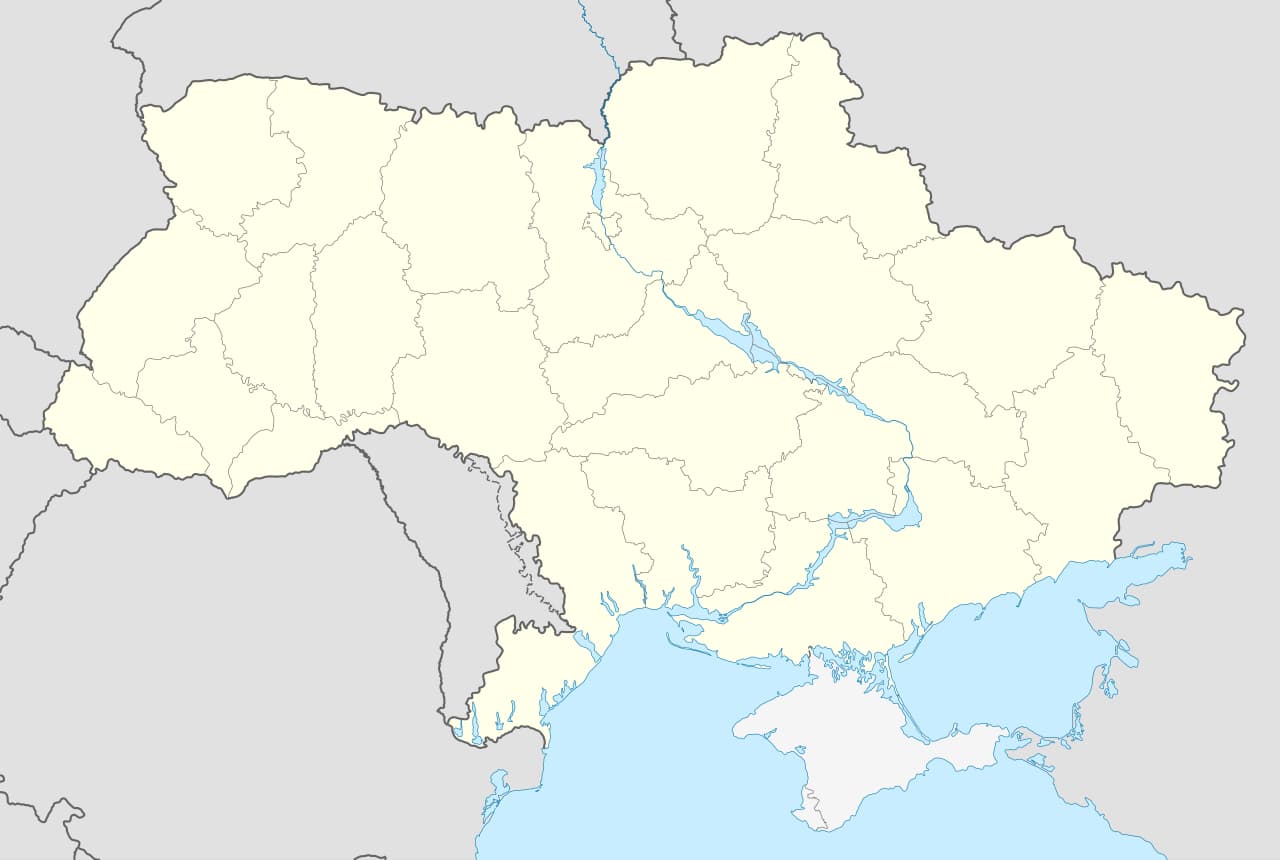
Featured image: Location map of Ukraine by NordNordWest, via Wikimedia Commons, licensed under CC BY-SA 3.0.