NASA Opens Up-to-$10B Moon Contract, Advances Nuclear Rover
A new lunar delivery framework could reach $10 billion over 10 years, while NASA's PROMISE rover aims for a late-2028 trip to the Moon's south pole.
By shahzad
7 min read1 readers
In this story
Key takeaways
NASA selected eight companies eligible to compete for future lunar cargo missions under a 10-year contract framework with a combined maximum value of $10 billion.
The agency is moving ahead with PROMISE, a nuclear-powered, six-wheeled rover targeted for the Moon's south pole in late 2028.
The $10 billion figure is the framework's maximum value, not a single mission award or an immediate payment to each company.
NASA announced a new package of Moon Base awards on November 7, 2026, opening a 10-year lunar delivery framework to eight companies and advancing development of a nuclear-powered rover. The PROMISE rover is designed to study the Moon's south pole and is targeted for launch in late 2028.
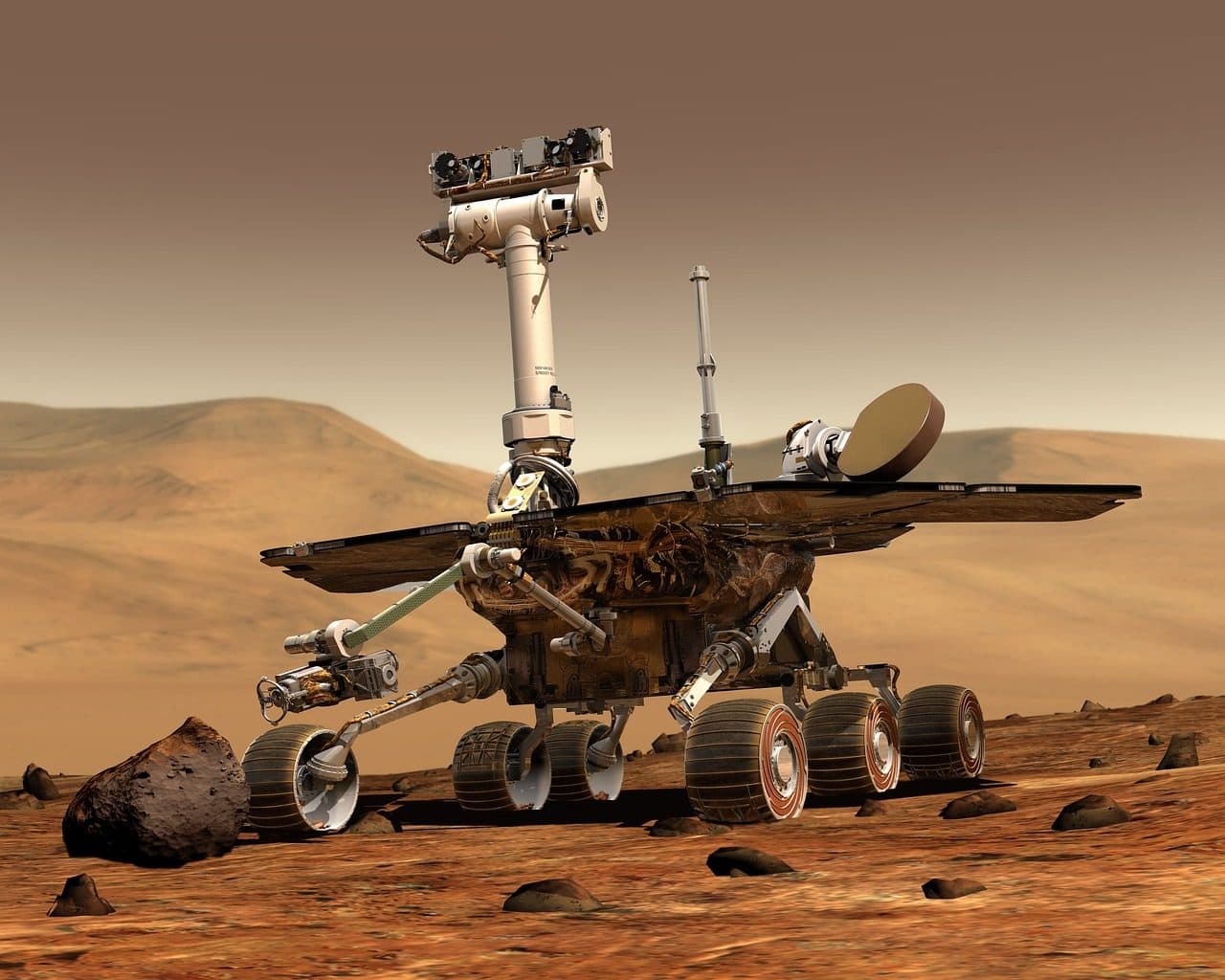
Featured image: A Mars rover on rocky terrain, used as a general illustration; it is not NASA's PROMISE rover. Photo by WikiImages on Pixabay (free license).
What did NASA announce on November 7, 2026?
NASA said it selected eight companies for the next phase of its Commercial Lunar Payload Services initiative, known as CLPS 2. The companies are Blue Origin, Firefly Aerospace, Intuitive Machines, ispace-U.S., Lockheed Martin Space, Northrop Grumman Space Systems, SpaceX and Voyager Technologies.
The companies are eligible to compete for future missions to deliver science instruments, technology and infrastructure to the lunar surface. NASA describes CLPS 2 as a 10-year, multiple-award, indefinite-delivery, indefinite-quantity contract with a combined maximum value of $10 billion. The agency's announcement does not describe that amount as an immediate payment or a single mission award.
NASA also increased the value of its existing CLPS 1.0 contract from $2.6 billion to $4.2 billion to support the first phase of its Moon Base objectives. That earlier contract remains in place through November 2028, with an additional five-year period for completing already-awarded lunar deliveries through November 2033.
The rover announcement is the other major part of the package. NASA is moving forward with PROMISE, short for Polar Rover for Observation, Mapping, and In-Situ Exploration. The six-wheeled vehicle is intended to investigate the lunar south pole, including permanently shadowed regions that NASA says may contain ice.
NASA's Jet Propulsion Laboratory will manage and build PROMISE using spare flight components and engineering test models from the Curiosity and Perseverance Mars rovers. The rover is expected to carry a drill that can reach about 3 feet (1 meter) below the surface, along with spectrometers, temperature and radiation sensors, cameras and a radiation-tolerant computing system.
NASA is targeting a late-2028 launch and an 18-month mission. The agency awarded Blue Origin a $94 million base contract to deliver PROMISE using its Mark 1 lander, with a performance-based option worth an additional $140 million.
The package also includes six task orders under a separate launch-services and orbital-transfer program. NASA put their combined value at about $1.3 billion. Those orders support transportation and delivery capabilities between Earth orbit, lunar orbit and the Moon's surface; they are separate from the $10 billion CLPS 2 framework.
Why the $10 billion figure needs context
Analysis: The headline number describes the maximum value of a long-term contract framework, not a $10 billion check being handed to eight companies. NASA has made the firms eligible to compete for future delivery missions. Specific work will depend on the missions and task orders the agency awards.
That distinction matters for taxpayers and the space industry. The selection broadens NASA's pool of commercial providers, but it does not mean every company will receive the same number of missions, build an identical lander or collect a guaranteed share of the maximum value.
The rover is a more concrete near-term milestone. PROMISE is not being presented as a mining vehicle or proof that usable lunar ice has already been found. NASA says its drill and instruments will help characterize the surface and subsurface, assess resource potential and inform future landing-site choices.
Its nuclear power source is tied to the mission's geography. NASA says PROMISE will be able to operate during long lunar nights and inside permanently shadowed regions, where the agency believes ice may be present. Those measurements could help planners decide where later equipment and human missions can operate.
The broader strategy is to assemble a working supply chain before astronauts depend on it: cargo landers, orbital-transfer vehicles, communications, power systems and robotic scouts. In its independent November 7 report, Scientific American also described the rover and supporting infrastructure as part of NASA's effort to prepare the lunar environment for future human activity.
Commercial launch capacity is becoming a strategic issue beyond NASA's lunar program, too. Big Zero has covered a separate example in its report on AST SpaceMobile's Blacklift rocket plan. That project is not part of NASA's awards, but it illustrates how satellite and space companies are seeking more control over access to orbit.
What should readers watch next?
The first thing to watch is whether NASA turns the new framework into specific mission orders. The $10 billion maximum value alone does not tell readers how many landers will fly, when each will launch or which company will receive each job.
For PROMISE, the main public milestone is the late-2028 launch target. NASA has not announced a specific launch date in the release. The rover's construction, testing, delivery arrangements and performance will determine whether that target holds.
There are also nearer-term infrastructure steps. NASA said work on initial components for its Mini-Communications and Solar Tower is expected to begin within months. A separate solicitation for fully integrated power systems is anticipated in early 2027.
Readers following the public cost of the program should distinguish between contract ceilings, base awards, performance-based options and individual mission orders. Those figures describe different things and should not be added together as if they were one confirmed bill.
Frequently asked questions
Is NASA spending $10 billion on the Moon Base right now?
No. NASA described CLPS 2 as a 10-year contract framework with a combined maximum value of $10 billion. The eight selected companies are eligible to compete for future lunar delivery missions; the announcement is not a single $10 billion payment.
What is NASA's PROMISE rover?
PROMISE is a six-wheeled, nuclear-powered rover being developed to study the Moon's south pole. NASA says it will use a drill and scientific instruments to examine lunar material, measure conditions and assess resources that could matter to future missions.
When will PROMISE launch?
NASA is targeting late 2028 for launch and planning an 18-month mission. That is the agency's current target, not a confirmed launch day.
Why does the rover need nuclear power?
NASA says the power system will allow PROMISE to operate through long lunar nights and in permanently shadowed regions. Those areas are scientifically important because they are thought to harbor ice.
Which companies can compete for CLPS 2 missions?
The eight selected companies are Blue Origin, Firefly Aerospace, Intuitive Machines, ispace-U.S., Lockheed Martin Space, Northrop Grumman Space Systems, SpaceX and Voyager Technologies. Selection makes them eligible to compete; it does not mean each has already received a specific delivery mission.
Bottom line
NASA's November 7 announcement expands the commercial network it wants to use for lunar deliveries and moves a nuclear-powered south-pole rover toward a late-2028 target. The practical detail to remember is that the $10 billion figure is a contract maximum, while the mission-by-mission awards and PROMISE's development schedule will show what actually gets built and flown.