Black Hole Study Finds a 12–16 Solar-Mass Dip
Gravitational-wave data point to a distinct group of roughly 10-solar-mass black holes, but no failed supernova has been directly confirmed.
By shahzad
7 min read1 readers
In this story
Key takeaways
A study published in Physical Review D on November 10, 2026, finds a pronounced concentration of merging black holes near 10 times the Sun's mass.
The analysis finds a sharp drop across the 12.0-to-16.1-solar-mass range, a pattern that may point to stars collapsing directly into black holes.
The researchers have not proved that a particular star died without a supernova; the result is evidence for a possible formation channel, not a direct observation.
Gravitational-wave data suggest that some black holes may come from massive stars that collapse inward without producing a supernova explosion. The new study identifies a strong peak near 10 solar masses and a pronounced dip at higher masses, offering a testable clue about how black holes form.

What happened in the new black-hole study?
On November 10, 2026, Physical Review D published research by Isaac Legred, Jacob Golomb and Katerina Chatziioannou on a possible population of black holes formed by failed supernovae. The team examined gravitational-wave observations of merging black-hole pairs and asked whether the mass distribution fits a scenario in which some stars collapse directly into black holes.
The paper's analysis uses 153 observations from the GWTC-4.0 catalog. It finds a strong peak in the distribution of the heavier black hole in a pair — known as the primary mass — near 10 solar masses. The estimated merger rate then falls sharply and is consistent with zero at the 90% level for primary masses between 12.0 and 16.1 solar masses.
That dip matters because it is not what a simple, smooth distribution would necessarily predict. The rate rises again above roughly 16 solar masses, suggesting that the black holes below and above the dip may not all come from the same kinds of stars.
The researchers propose that a subset of massive stars may be especially likely to collapse directly into black holes instead of exploding as supernovae. In that scenario, a star's core implodes and leaves a black hole behind with relatively little material expelled. The paper's updated manuscript says the pattern also persists in the team's latest GWTC-5.0 analysis.
The study is based on gravitational waves: tiny ripples in space-time produced by accelerating masses, including pairs of black holes spiraling together. The LIGO detectors in the United States, together with Virgo in Italy and KAGRA in Japan, measure those signals. Researchers can use the signals to estimate the masses and other properties of the objects that merged.
The research paper on arXiv describes the statistical analysis. The American Physical Society's November 10 research synopsis explains why the mass pattern is consistent with a failed-supernova population, while Caltech's research announcement summarizes the team's interpretation.
Why does the possible mass gap matter?
Analysis: A supernova is the spectacular explosion that can occur when a massive star reaches the end of its life. Astrophysicists have long considered the possibility that some stars do not produce a successful explosion. Their cores may instead collapse directly into black holes.
Finding a separate population of black holes near 10 solar masses would help researchers connect the final stages of a star's life to the black holes detected billions of years later. It could also help explain why the observed population is not spread evenly across all masses.
The distinction is important because a black hole's mass is one of the few clues scientists can infer from a merger signal about the star or environment that produced it. If a narrow group has a different origin, models of stellar evolution and binary-star formation may need to account for that channel.
The result does not change what people need to do in daily life, and it is not a warning about a nearby cosmic event. Its value is scientific: it gives researchers a measurable pattern to test against future gravitational-wave detections and models of how massive stars die.
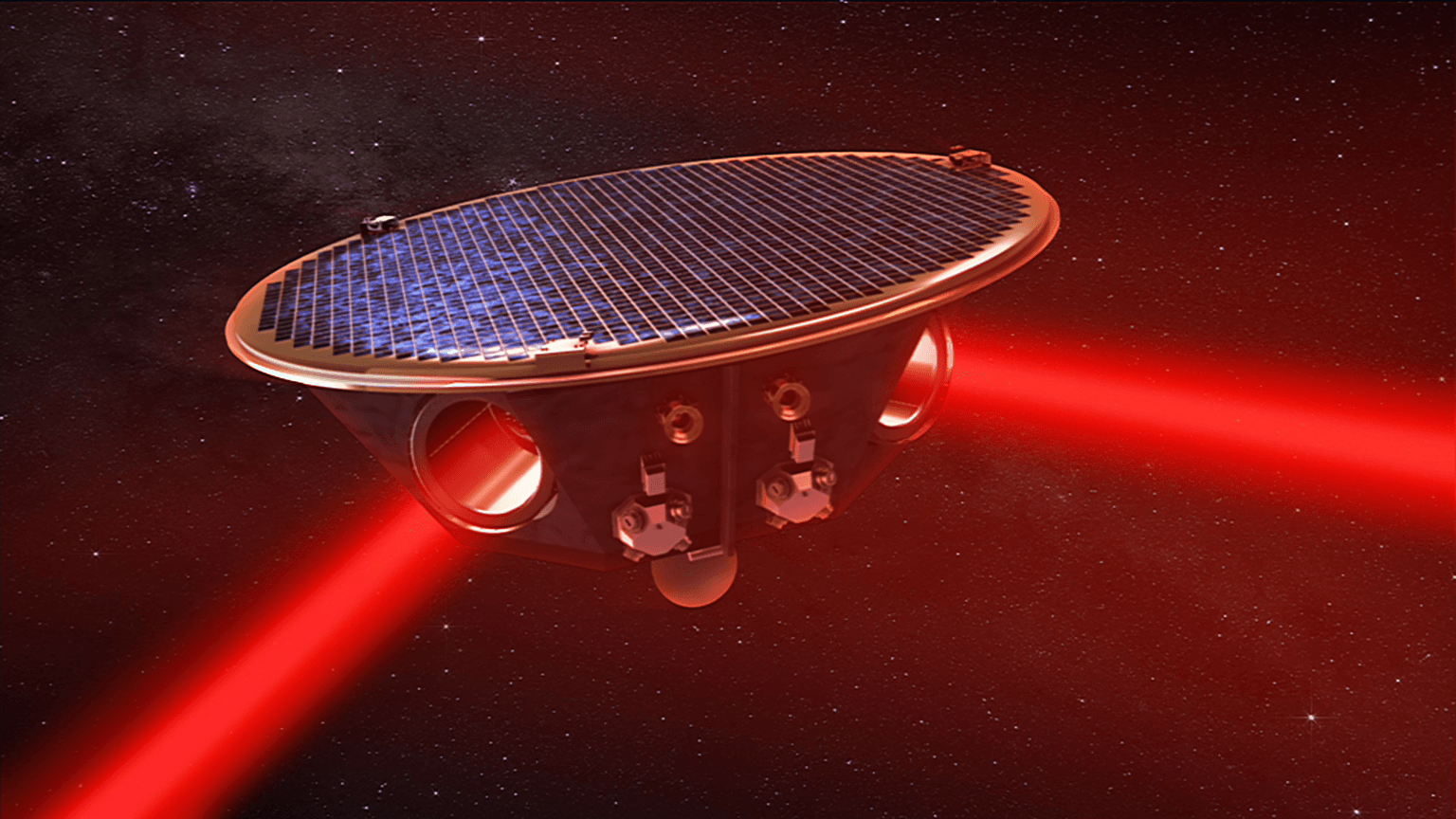
Big Zero previously covered a different use of gravitational waves in NASA's work on how the planned LISA observatory could help find exoplanets. That research concerns detecting planets in distant star systems; this new study uses black-hole merger data to investigate how the black holes themselves may have formed.
What should readers take from the finding?
The most useful way to read the result is as a strong clue, not a confirmed explanation. The mass distribution is consistent with a group of black holes formed through direct collapse, but other astrophysical processes and assumptions in the statistical models still matter.
For readers following the story, three details are worth watching:
The next gravitational-wave catalogs: Larger and more precise samples can show whether the dip remains as more mergers are detected and analyzed.
Independent modeling: Other research teams can test whether different statistical methods and assumptions recover the same structure in the mass distribution.
Evidence from stellar evolution: Computer simulations and observations of massive stars may help explain which stars fail to explode and under what conditions.
The authors' latest manuscript reports that the pattern persists in GWTC-5.0, but that does not settle the physical explanation. The next step is to see whether the feature remains robust as researchers compare independent analyses and refine their models.
What is still unknown?
No individual star has been observed undergoing a confirmed failed supernova in this research. The study infers a possible formation route from the population of black holes that later merged; it does not watch the original stars collapse.
Scientists also do not yet know whether direct collapse is the only explanation for the mass pattern, how much the result depends on assumptions about binary formation, or why the rate drops so sharply over a relatively narrow mass range. The authors themselves describe the result as consistent with a distinct population, rather than proof that every black hole near 10 solar masses formed this way.
Future detections may strengthen the case, weaken it or reveal that several formation channels overlap. That uncertainty is part of what makes the next round of gravitational-wave analysis important.
Frequently asked questions
What is a failed supernova?
A failed supernova is a proposed outcome in which a massive star's core collapses into a black hole without producing a successful, bright explosion. The star may leave little visible debris compared with a conventional supernova.
Does this study prove that stars can collapse without exploding?
No. It finds a pattern in black-hole merger masses that is consistent with that explanation. The researchers did not directly observe a star undergoing a failed supernova.
What does 10 solar masses mean?
It means a black hole with about 10 times the mass of the Sun. In a binary merger, the study focuses on the primary mass, meaning the heavier of the two black holes.
Why is the 12-to-16-solar-mass range important?
The paper finds that the estimated merger rate drops sharply in that interval and is consistent with zero at the 90% level. That gap-like feature may indicate a distinct group of black holes, but it still needs further testing.
What data did the researchers use?
The paper reports an analysis of 153 observations from the GWTC-4.0 gravitational-wave catalog. Its updated manuscript says the main pattern also appears in the team's latest GWTC-5.0 analysis.
Bottom line
The study offers a new, measurable clue that some black holes near 10 solar masses may form when massive stars collapse without a supernova. It is not proof of a failed supernova, but it gives astrophysicists a clear pattern to test as more gravitational-wave data become available.